
Why Your Competitors With More Google Reviews Are Getting More Customers
- Review Buddy
Summary
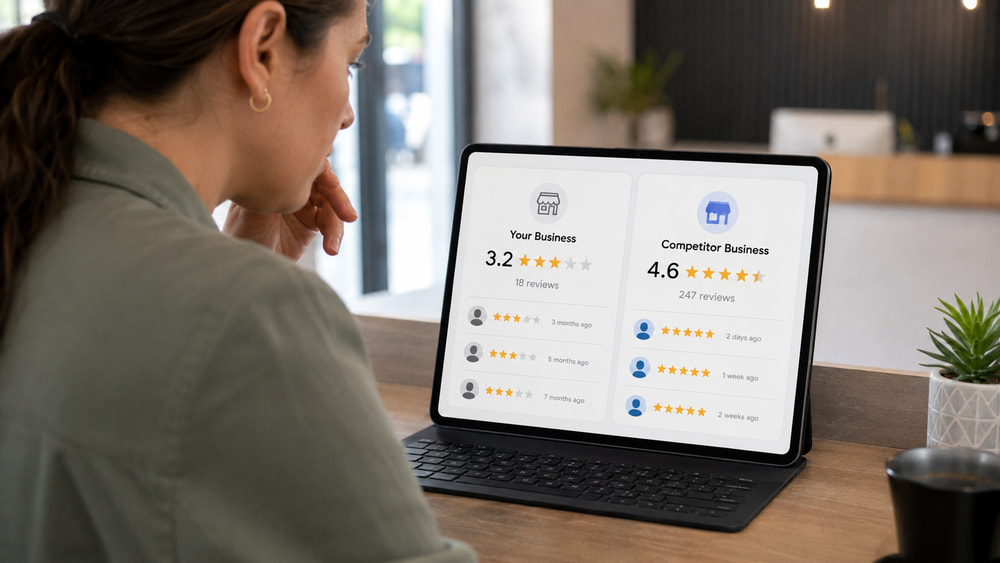
Your competitors are not always better than you. They may just look more trusted online.
When a customer searches for a local business, they usually compare star ratings, review count, review quality, and how recent the reviews are. If your competitor has more Google reviews, better recent feedback, and active review responses, they can win the customer before you ever get the chance to speak.
Google reviews affect trust, clicks, calls, bookings, and local visibility. Google shows review scores, top reviews, and total review counts on Search and Maps, which means customers can judge your business before visiting your website.
The review gap is simple: if your competitors look more trusted, they will often get chosen first.
Key takeaways
- Customers compare your Google reviews against your competitors before they contact you.
- More reviews can make a business look safer, busier, and more trusted.
- Google reviews support local visibility because reviews are part of a business’s online prominence.
- Recent reviews matter because they show your business is still active.
- Review responses make your business look more professional and engaged.
- Fake reviews and incentivized reviews are risky and can damage your profile.
- A consistent review system beats waiting for customers to leave reviews randomly.
The Customer Decides Before They Call
Most local businesses think the sale starts when the customer calls, books, or walks in.
That is wrong.
The sale usually starts on Google.
A customer searches something like:
- best physiotherapist near me
- pizza near me
- dentist in Courtenay
- massage therapist near me
- roofing company near me
- best spa near me
Then they compare options.
They look at:
- Star rating
- Number of reviews
- Recent reviews
- Photos
- Location
- Business hours
- Responses from the owner
- Website
- Services
If your business has 37 reviews and your competitor has 486, the customer notices.
Even if you provide better service, the competitor looks safer.
Customers do not always choose the best business. They choose the business that looks like the safest decision.
That is why Google reviews matter so much. They reduce doubt before the customer contacts you.
The Review Gap Is Costing You Customers
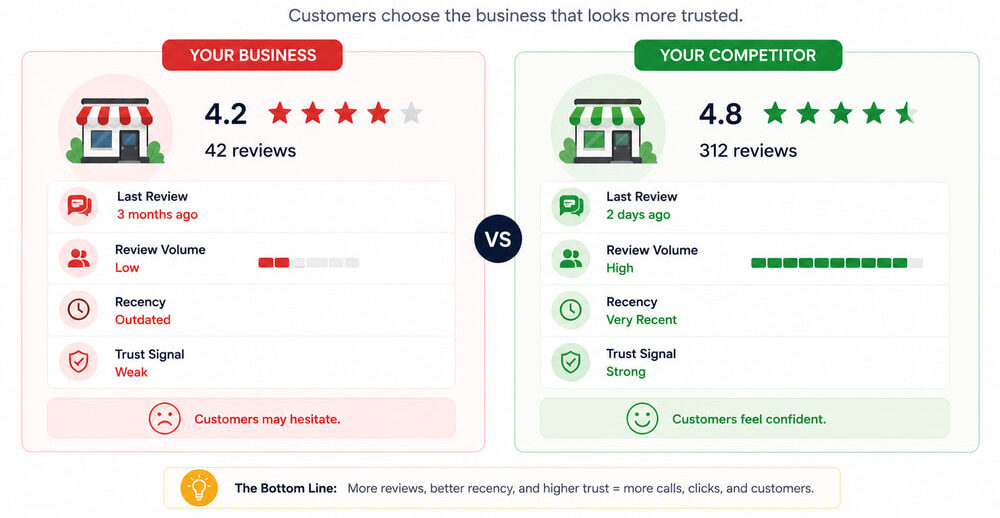
The review gap is the difference between your review profile and your competitor’s review profile.
Example:
Your business:
- 4.7 stars
- 42 reviews
- Last review was 3 months ago
Competitor:
- 4.8 stars
- 312 reviews
- Last review was 2 days ago
Who looks more active?
Who looks more trusted?
Who looks like the safer choice?
The answer is obvious.
This does not mean the competitor is better. It means they have stronger public proof.
For local businesses, public proof matters. BrightLocal’s 2026 Local Consumer Review Survey found that 97% of consumers read reviews for local businesses, and 71% use Google to read local business reviews.
That means customers are not guessing. They are checking.
If your competitors have more reviews, they are building trust at the exact moment customers are ready to choose.
More Reviews Create Less Risk for the Customer
Buying from a local business always involves risk.
The customer is thinking:
- Will they do a good job?
- Can I trust them?
- Are they professional?
- Will I regret choosing them?
- Is there a better option nearby?
Reviews reduce that risk.
A business with more real reviews gives the customer more evidence. More people have tried it. More people have shared their experience. More proof exists.
That matters.
A high star rating with only 8 reviews is weak proof.
A strong star rating with 300 reviews is stronger proof.
The customer may not think about it deeply, but psychologically, review volume creates confidence.
More Google reviews make a business feel like a safer choice, even before the customer reads every review.
That is the advantage your competitors may have right now.
Google Reviews Can Help Local Visibility
Google uses many signals to decide which businesses appear in local search results.
Google says local ranking is based on relevance, distance, and prominence. Prominence is about how well-known a business is, and Google says review count and review score are factors because more reviews and positive ratings can improve local ranking.
This does not mean reviews are the only ranking factor.
They are not.
Your website, business category, location, citations, content, photos, services, and overall profile quality also matter.
But reviews are one of the clearest public trust signals.
Whitespark’s Google Business Profile review guide notes that 4 of the top 20 Google ranking factors involve reviews, based on its Local Search Ranking Factors research.
So when your competitor keeps getting reviews and you do not, they are not just building trust. They may also be strengthening their local SEO signals over time.
Google reviews help customers trust you, and they can also support how visible your business looks in local search.
Recent Reviews Matter
Old reviews are better than no reviews, but recent reviews are stronger.
A review from 2019 does not carry the same psychological weight as a review from last week.
Customers want to know what your business is like now.
Recent reviews show:
- You are active
- Customers are still choosing you
- Your service quality is current
- Your business is still relevant
- People are still having good experiences
A business with steady recent reviews looks alive.
A business with old reviews can look neglected.
That is why random review spikes are not enough. Getting 20 reviews in one month and then nothing for six months creates an uneven profile.
Whitespark recommends making review requests part of ongoing local SEO work because timely review requests help businesses get more reviews and consistent new reviews can positively impact rankings.
A steady flow of recent reviews is more powerful than a random burst of reviews once in a while.
Review Responses Build Trust Too
Getting reviews is not the full job.
You also need to respond.
When a business replies to reviews, it shows future customers that someone is paying attention.
A simple response can make your business look:
- Professional
- Active
- Appreciative
- Customer-focused
- Trustworthy
You do not need long replies.
Example:
Thank you, Sarah. We appreciate you choosing us and are glad you had a great experience.
For negative reviews:
Thank you for your feedback. We’re sorry your experience did not meet expectations. Please contact us directly so we can look into this and make it right.
Do not argue. Do not attack. Do not expose private customer details.
Future customers are not only reading the review. They are watching how you handle people.
A professional review response can turn a public review into a trust-building moment.
Your Competitor May Not Be Better. They May Just Have a Better System.
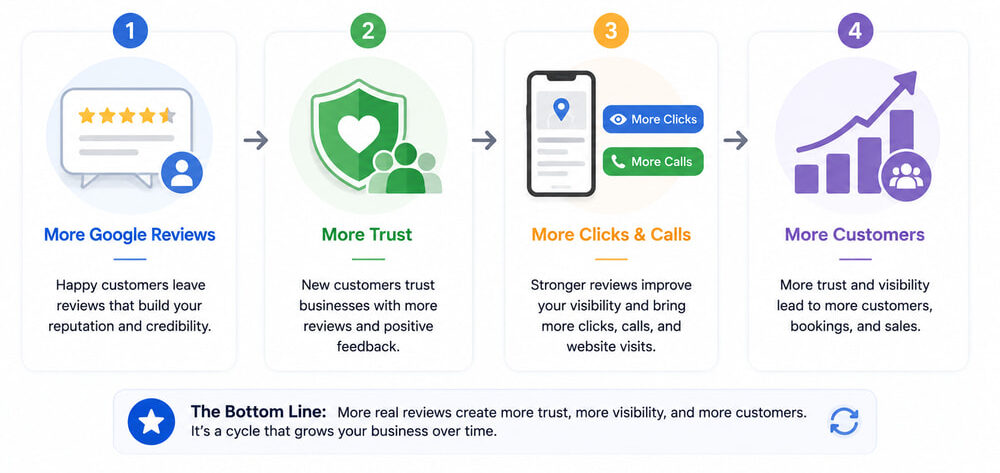
This is the part most business owners miss.
Your competitor may not have better staff.
They may not have better service.
They may not have better pricing.
They may simply have a better review process.
They ask at the right time. They send a direct link. They follow up. They make it easy. They do it consistently.
You might be waiting for customers to remember on their own.
That is not a strategy.
Happy customers are busy. They forget. They move on. They may love your business and still never leave a review.
A review system fixes that.
It turns review generation into a repeatable process instead of a random hope.
The businesses winning more reviews are usually not luckier. They are more consistent.
That is exactly where Review Buddy fits. It helps local businesses send personalized review requests automatically so happy customers are reminded at the right moment.
The Problem With Manual Review Asking
Manual review asking sounds simple.
Tell staff to ask customers.
Done, right?
Not really.
In real life, staff forget. Customers are in a rush. The front desk is busy. The phone rings. The next appointment starts. The moment passes.
Manual asking fails because it depends on memory.
And memory is not scalable.
A proper review system should answer these questions:
- Who gets asked?
- When do they get asked?
- What message do they receive?
- Is the message personal?
- Does it include the direct review link?
- Is there a follow-up?
- Is the process consistent?
If you cannot answer those questions, your review process is weak.
If your team has to remember every review request manually, your review growth will always be inconsistent.
The Psychology Behind Choosing the Competitor
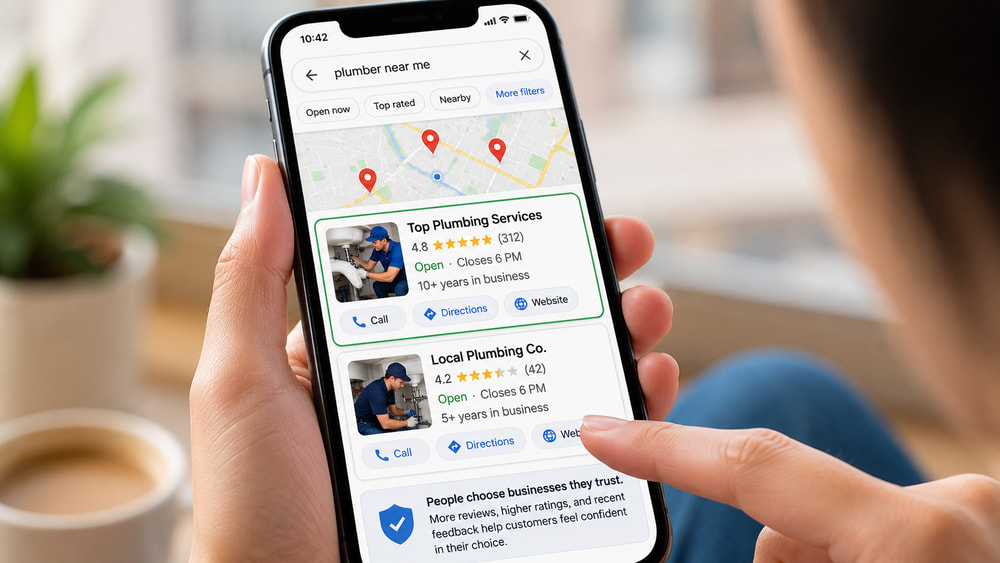
When customers compare two businesses, they are not just looking for information. They are looking for confidence.
Google reviews create confidence fast.
A competitor with more reviews triggers several psychological signals:
1. Social Proof
If many people reviewed the business, the customer assumes many people have trusted it.
2. Reduced Risk
More reviews make the choice feel safer.
3. Popularity Signal
A business with many reviews looks busy and established.
4. Recency Signal
New reviews show the business is still active and serving customers.
5. Emotional Reassurance
Positive customer stories make the buyer feel more comfortable.
This is why reviews can influence action before logic kicks in.
A customer may not say, “I picked them because they had 211 more reviews.”
But that is often exactly what happened.
Fake Reviews Are Not the Shortcut
Do not buy fake reviews.
Do not offer discounts for reviews.
Do not ask friends who never used your business.
Do not use fake accounts.
Do not ask for only 5-star reviews.
Google says businesses that violate its Fake Engagement policy may face restrictions, including limits on receiving new reviews or ratings, removal of reviews, or profile warnings.
The FTC also finalized a rule banning fake reviews and testimonials in 2024, including buying or selling fake consumer reviews.
Fake reviews are not growth. They are risk.
The better strategy is simple:
Ask real customers for honest reviews after real experiences.
That is safer, stronger, and better long term.
The goal is not to manipulate your reputation. The goal is to capture the real customer satisfaction you are already creating.
How to Close the Review Gap
You do not need to catch your biggest competitor overnight.
You need to start building momentum.
Here is the simple process.
1. Check Your Review Gap
Search your main service keywords.
Examples:
- dentist near me
- physiotherapy clinic near me
- pizza near me
- spa near me
- plumber near me
Write down your top 3 competitors.
Compare:
- Review count
- Star rating
- Most recent review date
- Review quality
- Owner responses
- Photos
- Business profile completeness
This will show you where you stand.
2. Fix Your Google Business Profile
Before asking for more reviews, make sure your profile looks professional.
Check:
- Business name
- Category
- Hours
- Phone number
- Website link
- Services
- Photos
- Description
- Appointment link
- Products or service areas if relevant
Reviews help more when the rest of your profile is clean.
3. Ask at the Right Moment
The best time to ask is when the customer has just had a positive experience.
This could be:
- After an appointment
- After a successful service
- After a purchase
- After a delivery
- After a customer says thank you
- After the job is complete
Do not wait weeks.
The emotional moment fades.
4. Send a Direct Review Link
Do not make customers search for your business.
Send the exact Google review link.
The fewer steps, the better.
5. Make the Message Personal
Bad:
Please leave us a review.
Better:
Hi Sarah, thank you for visiting us today. Your feedback helps other local customers choose us with confidence. If you have a minute, we’d appreciate your honest Google review.
Personalization gets attention.
6. Follow Up Once
One reminder is fine.
Multiple reminders feel pushy.
7. Make It Consistent
This is the biggest piece.
You need review requests going out every week, not only when someone remembers.
That is how you close the gap.
Review Buddy’s results page shows how stronger review generation can help businesses build a better online reputation over time.
What a Strong Review Profile Looks Like
A strong Google review profile usually has:
- A healthy number of reviews
- A strong average rating
- Recent reviews
- Detailed customer comments
- Owner responses
- Natural language
- A steady pattern of new reviews
- No obvious fake or repetitive reviews
You do not need perfection.
You need credibility.
A few negative reviews are not the end of the world. A perfect 5.0 rating with very few reviews can sometimes look less believable than a strong 4.8 rating with hundreds of real reviews.
Customers want real proof, not fake perfection.
The Business Case Is Simple
More reviews can lead to:
- More trust
- More clicks
- More calls
- More bookings
- More foot traffic
- Better conversion
- Stronger local reputation
- Better competitive positioning
This is why reviews are not just “nice to have.”
They are part of your sales system.
If customers are comparing you against competitors, your review profile is doing sales work before your team ever speaks.
The question is whether it is helping you or hurting you.
Your Google reviews are not just feedback. They are public sales proof.
How Review Buddy Helps Local Businesses Compete
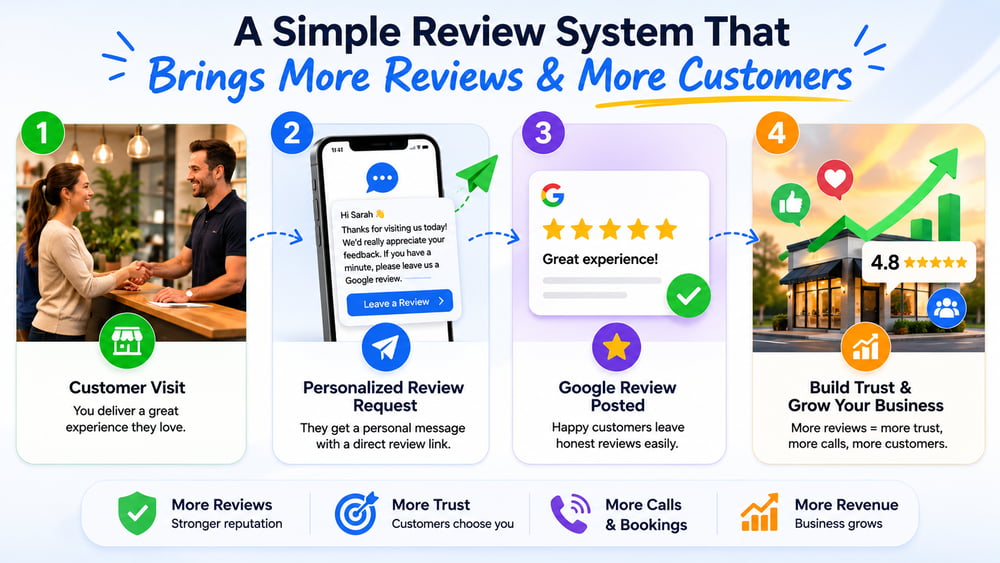
Review Buddy helps local businesses collect more real Google reviews without relying on awkward manual asking.
The system is built around a simple idea:
Happy customers are more likely to leave reviews when they are asked at the right time with a personal message and a direct link.
Instead of waiting for customers to remember, Review Buddy helps automate the follow-up.
That means your business can:
- Ask more consistently
- Reduce staff workload
- Capture happy customer moments
- Build recent reviews
- Improve trust
- Compete against businesses with stronger review profiles
You can learn more here: https://reviewbuddy.ca/
For pricing, visit: https://reviewbuddy.ca/pricing/
FAQ
Do Google reviews help local SEO?
Yes, Google reviews can support local SEO. Google says review count and review score are factors in local ranking because they contribute to prominence. Reviews are not the only factor, but they matter.
Why do competitors with more reviews get more customers?
They often look more trusted, active, and safer to choose. Customers compare businesses quickly, and a stronger review profile can influence who gets the call or booking.
Is review count more important than star rating?
Both matter. A high star rating with very few reviews may not feel as trustworthy as a strong rating backed by many real reviews.
How often should a business get new reviews?
Ideally, reviews should come in consistently over time. A steady flow of recent reviews looks more natural and active than occasional review spikes.
Should businesses ask every customer for a review?
Businesses should ask real customers for honest feedback after real experiences. The request should not pressure customers or ask only for positive reviews.
Can businesses offer discounts for Google reviews?
No. Offering incentives for reviews can create policy problems. Ask for honest reviews without rewards or pressure.
What is the easiest way to get more Google reviews?
The easiest way is to use a consistent system that sends timely, personal review requests with a direct Google review link.
Final Thoughts
Your competitors may not be better than you.
They may just have more public proof.
When customers search on Google, they compare review profiles fast. If your competitor has more reviews, more recent feedback, and better responses, they look like the safer choice.
That is how you lose customers before they ever call.
The fix is not fake reviews. The fix is not begging. The fix is a consistent review system.
Ask real customers. Ask at the right moment. Make it personal. Send the direct link. Follow up once. Keep doing it.
That is how you close the review gap.

Review Buddy helps local businesses improve their online reputation, automate customer follow-ups, and generate more Google reviews with simple, personalized review request systems.